
Gheymeh Recipe: Persian Split Pea & Meat Stew
Gheymeh is a Persian split pea and meat stew simmered with tomato, dried lime, and a touch of cinnamon, traditionally topped with crispy golden fried potato matchsticks (sib zamini sorkh karde) just before serving — swap those for fried eggplant and you have gheymeh bademjan. It’s one of the most common everyday stews in Iranian home cooking.
- Prep time: 15 minutes
- Cook time: 1.5-2 hours
- Servings: 4-6
Gheymeh Ingredients
- 1 lb stew beef or lamb, cubed
- 1 cup yellow split peas, rinsed
- 1 onion, finely chopped
- 3 tbsp tomato paste
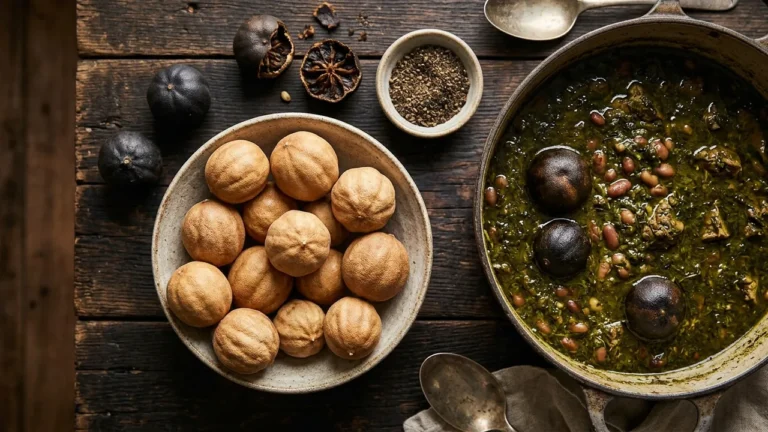
- 2-3 whole dried limes (limoo amani), pierced with a fork
- 1/2 tsp cinnamon
- 1/4 tsp turmeric
- 2-3 medium potatoes, cut into matchsticks, for frying
- Oil, salt, and pepper to taste
How to Make Gheymeh
- In a pot, sauté the chopped onion in oil until golden, then add the cubed meat and brown on all sides.
- Stir in the turmeric and tomato paste, cooking for 1-2 minutes until fragrant. Add enough water to cover, along with the pierced dried limes and cinnamon. Bring to a boil, then reduce to a simmer, cover, and cook for 45 minutes.
- Add the rinsed split peas and continue simmering, covered, for another 45 minutes to an hour, until the meat is tender and the split peas are soft but still holding their shape. Season with salt and pepper.
- While the stew finishes, fry the potato matchsticks in oil until golden and crisp. Drain on a paper towel and salt lightly.
- Ladle the stew over steamed rice and top each serving with a generous handful of the crispy fried potatoes right before serving, so they stay crunchy.
Short on Time? Try the Ready-Made Version
Simmering split peas and meat for nearly two hours isn’t always realistic on a weeknight. Goaldees carries ready-to-eat canned Persian stews — just heat, top with quick-fried potato matchsticks, and serve over rice. Try the canned gheymeh, or browse the canned meals range. Real dried lime (limoo amani) is worth keeping on hand if you’re building the dish from scratch — it’s what gives gheymeh its distinctive tang.
Tips for the Best Gheymeh
- Pierce the dried limes before adding them — this lets their tangy flavor infuse the stew instead of staying locked inside the shell.
- Don’t add the potatoes to the stew itself — frying them separately and adding just before serving is what keeps them crisp instead of turning soggy.
- Simmer the split peas gently — too vigorous a boil breaks them down into mush; a low simmer keeps them intact.
The Two Timing Problems in Gheymeh
Split peas: added too early, they dissolve
Yellow split peas should finish tender but still recognisable as individual peas. Added at the start of a long braise they disintegrate into the sauce, turning gheymeh into a thick yellow purée. Add them partway through — roughly 20–30 minutes before the meat is done, depending on the peas — and check one before the stew is finished.
Older split peas take considerably longer than fresh ones, which is why a timing that worked last time may not work with a new bag.
Dried lime: pierce it, and mind the acid
Pierce each limoo omani two or three times so liquid can get in; whole unpierced limes float and release very little. The same rule decides abgoosht, where the dried limes also go in late rather than at the start. Do not crush them open and leave them for hours — the seeds and pith are where harsh bitterness comes from.
There is also a chemistry reason to add sourness later rather than earlier: legumes soften as heat breaks down the pectin in their cell walls, and acidic conditions strengthen those pectin cross-links, slowing the process. Adding dried lime at the very start can leave split peas stubbornly firm.
The potatoes are a garnish, not an ingredient
The fried potato matchsticks go on top at the moment of serving, and they are fried separately for a reason: cooked in the stew they go soft and the dish loses the textural contrast that defines it. Fry them until genuinely crisp, drain well, and add them last — they soften within minutes of hitting the sauce.
Troubleshooting
- Split peas dissolved into mush — added too early, or overcooked. Add them later next time and test one before finishing.
- Split peas still hard — old peas, or acid added too early. Get them tender before the dried limes go in.
- Bitter — dried limes crushed open or simmered too long. Remove them once the stew is sour enough.
- Soggy potatoes — fried too far ahead, under-drained, or added before serving rather than at the table.
- Flat-tasting — usually not enough tomato paste sautéed with the onions; frying the paste briefly before adding liquid deepens it considerably.
Frequently Asked Questions
What is gheymeh made of?
Gheymeh is a stew of cubed meat and yellow split peas simmered with tomato paste, dried lime, and cinnamon, typically topped with crispy fried potato matchsticks and served over rice.
Why does gheymeh taste tangy?
The tang comes from dried limes (limoo amani), which are simmered whole in the stew and pierced first to release their sour, slightly smoky flavor.
Why do the potatoes go on top instead of in the stew?
Frying the potato matchsticks separately and adding them just before serving keeps them crisp — simmered in the stew, they would turn soft and soggy.
Why did my split peas turn to mush?
They were added too early. Split peas need far less time than the meat, so adding them at the start of a long braise dissolves them into the sauce. Add them roughly 20–30 minutes before the stew is finished and test one for doneness.
Why are my split peas still hard?
Either the peas were old, or acid went in too early. Legumes soften as heat breaks down cell-wall pectin, and acidic conditions strengthen those pectin cross-links — so dried limes added at the start can keep the peas firm. Cook them tender first, then add the sourness.
Is there a faster way to make gheymeh?
Yes — Goaldees sells a ready-to-eat canned gheymeh, so you can skip the long simmer and just heat, top with fried potatoes, and serve over rice.
Shop the Ready-Made Version
Skip the long simmer and try authentic gheymeh from Goaldees (also searched as Goldis), shipped fresh, nationwide across the US. Shop Can Foods.
Not sure which stew to try? See our Persian khoresht guide comparing this and 3 other classics.
Persian stews are traditionally served with a side of torshi (pickles) to cut the richness. See our Persian torshi guide.
Want more heat-and-serve options? See our Persian Canned Meals Guide for the full ready-to-eat lineup.
Shop the Gheymeh ingredients
The Goaldees pantry items used in this Gheymeh recipe — add them straight to your cart.