Rosebud Tea: How to Brew Dried Rosebuds the Persian Way
How many dried rosebuds per cup, the right water temperature and steep time, and the Persian way to brew rosebuds with black tea, cardamom and saffron rock candy.

Persian and Middle Eastern cooking turns on a few repeatable techniques — frying dried herbs until they darken and sweeten, layering rice so it steams into a crisp tahdig, pouring cold syrup over a hot cake so it drinks it in. Every recipe here explains the one step that actually decides whether the dish works, and names the ways it usually goes wrong.Most of the harder-to-find ingredients — dried herbs, kashk, barberries, saffron, pomegranate molasses — are in the Goaldees shop, and the Persian food glossary explains what each one is.

How many dried rosebuds per cup, the right water temperature and steep time, and the Persian way to brew rosebuds with black tea, cardamom and saffron rock candy.

A soft almond and semolina cake with cardamom and orange zest, soaked in a saffron rose syrup and topped with pistachios and rose petals, plus the true story of where Persian love cake comes from.

How to make Persian carrot jam (moraba-ye havij): carrot matchsticks in a light cardamom syrup with rose water and saffron, plus storage and food-safety notes.
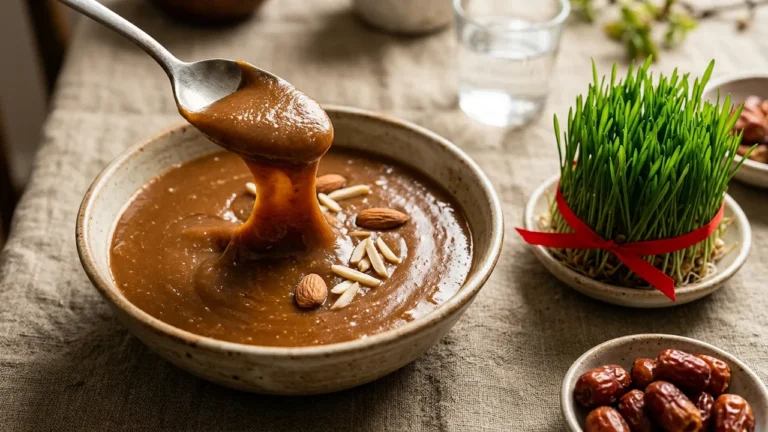
Samanu (samanoo) is the sweet, brown sprouted-wheat pudding on the Nowruz haft-sin, traditionally made with no added sugar. Here is what it is made of, why it is sweet, its names from Iran to Central Asia, and a home method compiled from three published recipes.

Abgoosht, also called dizi, is a Persian lamb, chickpea and white bean stew eaten as two courses from one pot. The method, the dried-lime technique, and how to actually serve it.

Albaloo polo is Persian sour cherry rice. How to make it with dried sour cherries, why the cherries must be cooked separately from the rice, and how it differs from zereshk polo.

Borani bademjan is cooked eggplant folded into thick yogurt with garlic. Why hot eggplant splits the yogurt, the two draining steps that decide the texture, and how it differs from kashk-o-bademjan.

Gheymeh bademjan swaps the fried potato of classic gheymeh for fried eggplant. The narrow window for adding split peas, why acid keeps them hard, and the ten-minute version from a tin.

Khoresh bademjan is the Persian eggplant and tomato stew. Why eggplant drinks oil and how to stop it, which souring agent to use and when to add it, and the shortcut that removes the frying entirely.

Tahdig is the golden crust at the bottom of the Persian rice pot. The two-stage method, the four kinds of tahdig, why the cloth on the lid decides whether it crisps, and the six ways it fails.
No products in the cart.