What Is Verjuice (Ab Ghooreh)? Taste, Uses and How to Cook With It
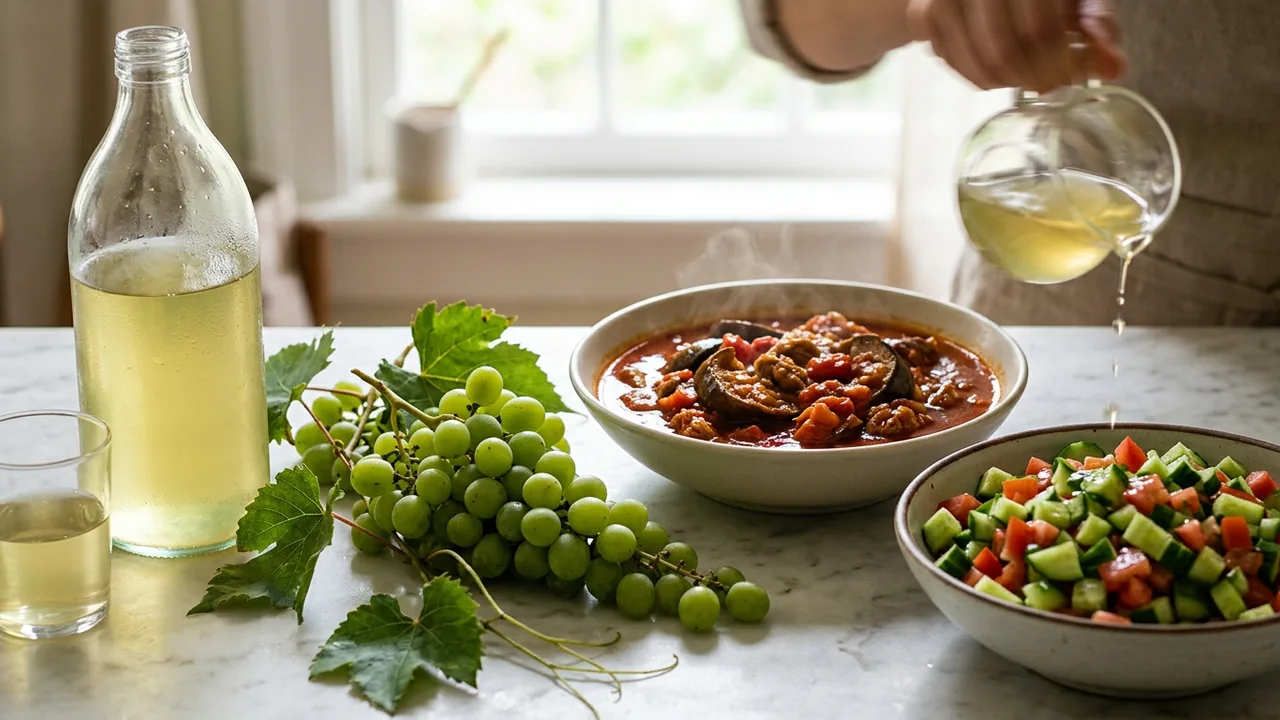
Verjuice is the sour, unfermented juice pressed from unripe grapes, used as a souring agent the way you would use lemon juice or a mild vinegar. The French spelling is verjus, from vert jus, “green juice”. In Persian it is ab ghooreh (آبغوره), and in Iranian kitchens it never went out of use. This guide covers what is in a bottle of sour grape juice, how it compares with lemon juice and vinegar, how Persian cooks use it, the best substitutes, and what the research says about its health effects.
What Is Verjuice?
Verjuice is grape juice taken before the grape has finished growing. The berries are picked while still small, green and hard, at any point from when the bunch closes up to veraison, the stage at which grapes start to soften and fill with sugar, and then pressed. Nothing is fermented: a 2023 Massey University study describes verjuice simply as “an unfermented acidic grape juice.”
Almost every grape-growing country has a name for it. A 2022 review in the Australian Journal of Grape and Wine Research lists verjus or vertjus in France, agraz in Spain, agresto in Italy, koruk in Turkey and abe-ghureh in Persia. The old English word was looser: the Oxford Companion to Food defines verjuice as an acid liquid obtained from crabapples, sour grapes and other unripe fruit.
The grapes usually come from thinning. Growers cut away part of the crop early in the season so the remaining bunches ripen better, and the thinned fruit is normally left on the ground to rot. Verjuice turns that waste into an ingredient.
What does ab ghooreh mean?
Ghooreh (غوره) is the Persian word for unripe grapes, and ab (آب) is water — here, juice. The Encyclopaedia Iranica defines ab ghooreh as the juice of ghooreh, and notes that the word is also applied, secondarily, to other unripe fruit. You will also see it spelled ab-ghooreh or abe-ghureh. The Goaldees verjuice comes in a 500 ml glass bottle labelled آبغوره / Verjuice / عصير عنب.
A Short History: Europe Forgot It, Iran Did Not
Verjuice is old. In a 2016 paper, Mario Casari of Sapienza University of Rome traces it from Greek and Roman sources, where it was used purely as a medicine, into the Arabic culinary tradition of the classical era, and from there into the cooking of medieval Europe.
In Europe it became a staple. The Oxford Companion to Food notes that the medieval cookery writer Taillevent uses verjuice as a seasoning in 40 per cent of his recipes. It lingered until the 19th century; in Western kitchens it was then superseded, almost completely, by a dash of lemon juice, with a small revival only towards the end of the 20th century.
Persian cooking never made that swap. The Encyclopaedia Iranica describes ab ghooreh as “sour and highly acidic,” used “both for its own sake and as a substitute for lemon juice,” sold commercially and bottled at home by many families. As recently as 2023, researchers called verjuice “relatively unknown” in Western cuisine while noting how widely it is used elsewhere, under names such as the Persian one.
What Is Actually in Verjuice?
Mostly water and acid. The 2022 review by Giovanna Fia and colleagues at the universities of Florence, Milan and Padua gathers composition data on verjuice from many grape varieties, including two Iranian samples:
- Acids: malic and tartaric. These are the main acids in grapes. In unripe fruit malic tends to lead: in one study of six varieties picked green, malic acid ran from about 11 to 22 g per litre and tartaric from about 6 to 11 g per litre.
- A very low pH. Across the verjuices and unripe-grape extracts in the review, pH ranged from 2.35 to 3.3. That is strongly acidic.
- Little sugar. Grapes build up sugar only after veraison. Most products in the review held under 50 g of sugar per litre, and the two Iranian verjuices had the lowest of all: 0.1 and 0.2 g per litre, effectively none.
- Phenolic compounds. These are behind the astringency and part of the sourness. Totals ranged from about 200 to over 7,500 mg per litre depending on grape, picking date and method; the Iranian samples measured 780 and 1,330.
The larger point is variation. Verjuice has no agreed standard of identity, so each producer chooses the grape, the picking time and the method, and commercial bottles range from very sour to noticeably sweet.
What Does Verjuice Taste Like?
Sour first, then fruity and green. In a sensory study of juices from unripe Merlot, Chardonnay and Sauvignon grapes, tasters described the taste as mainly sour and astringent, and the aroma as herbaceous, cooked or green apple, pear and floral. Producers interviewed for the Massey study used similar words (green apple, citrus, grassy) and described bitterness as low.
In a Persian stew it is the lightest of the usual souring options: sharp, clean and fruity, with none of the bitterness of dried limes.
The little data there is suggests Persian ab ghooreh sits at the sour, cooking end of the range: the two Iranian verjuices in the review above had almost no sugar at all.
Verjuice vs Lemon Juice vs Vinegar vs Sour Grape Paste
| Ingredient | How it is made | Main acid | Fermented? | Flavour and best use |
|---|---|---|---|---|
| Verjuice (ab ghooreh) | Unripe grapes, pressed | Malic and tartaric | No | Sour, green-apple fruit, low bitterness. Khoresh, dressings, deglazing, sharbat. |
| Lemon juice | Lemons, squeezed | Citric (about 48 g per litre in fresh juice) | No | Sharp and citrusy. Dressings, marinades, finishing a dish. |
| Wine vinegar | Grape juice fermented into alcohol, then fermented again into vinegar | Acetic (US labelling guidance: 4 g per 100 ml) | Yes, twice | Sharp and pungent. Pickles and vinegar syrups such as sekanjabin. |
| Sour grape paste (rob-e ghooreh) | Unripe grapes, cooked down to a paste | Grape acids, concentrated | Cooked down | Tart, with body as well as acidity. Stews. |
Is verjuice like vinegar?
In use, yes; in make-up, no. Both are sour liquids for a dressing or a hot pan, but vinegar is fermented. US FDA labelling guidance defines wine vinegar as “the product made by the alcoholic and subsequent acetous fermentations of the juice of grapes”: the juice becomes alcohol, and the alcohol becomes acetic acid.
Verjuice skips both steps. Its sourness comes from the malic and tartaric acid already in the green grape, so it lacks vinegar’s pungent acetic smell, which the 2022 review suggests could make it the preferred salad seasoning for people who dislike that smell. Persian cooks keep both: vinegar for sekanjabin, the mint and vinegar syrup, and ab ghooreh for a softer, fruitier sour.
Is verjuice alcoholic?
No. Verjuice is not fermented, so it is not an alcoholic drink the way wine is; Iranica describes commercial ab ghooreh being mashed, separated from seeds and skins, and put up in sterilized bottles, with no fermentation step. One caveat: with no legal standard, production varies, and in the New Zealand tasting one Canadian bottle had a winey flavour and a warmth that reminded tasters of alcohol. If you need to avoid alcohol completely, check the label.
How Persian Cooks Use Ab Ghooreh
A 2012 paper from Shiraz University of Medical Sciences describes it as common in Iranian family meals: mixed into salads, used to make food sour, and even drunk in small amounts. The Iranica entry lists where it matters most:
- Khoresh (stews). It sours khoresh-e esfenaj-o-aloo (lamb with spinach and prunes), khoresh-e havij (lamb with carrots) and khoresh-e chaghaleh badam (خورش چغاله بادام), lamb stewed with fresh, unripe almonds.
- Whole sour grapes. In khoresh-e ghooreh (خورش غوره), a lamb stew, the unripe grapes go into the pot whole.
- Soups and stuffed vegetables. It goes into ash-e saq, a soup of spinach, leeks and yellow split peas, and stuffed summer squash, dolmeh kadoo (دلمه کدو), is simmered in it.
- Pickles and powders. It was long used to sour pickles and spice mixtures (achar), and sour grape powder, gard-e ghooreh (گرد غوره), was sometimes reinforced with ab ghooreh and then dried.
Our khoresh bademjan recipe offers verjuice as one of three ways to sour the eggplant stew, about 3 tablespoons in place of 2–3 dried limes, added only once the meat is tender. Beyond the stew pot:
- Preserved sour plums. The most traditional jarred form of aloocheh, Persian sour plums, is whole plums held in verjuice: dar ab-ghooreh, intensely sour and salty.
- Sharbat. In our guide to Persian sharbat, verjuice is one of the optional acids, alongside lime juice and vinegar.
- Lavashak. A teaspoon or two of verjuice or lime juice sharpens the fruit paste in our homemade lavashak recipe.
- Rob-e ghooreh. Cooked down, the same fruit becomes sour grape paste (رب غوره), one of the tart pastes in our guide to Persian rob.
Verjuice in Western and Modern Cooking
Today’s verjuice producers are mainly winegrowers and winemakers, with some chefs. When the Massey team interviewed producers and ran discussion groups with New Zealand consumers, these uses came up:
- Dressings and sauces: in place of lemon juice or vinegar in vinaigrettes, and in place of wine in sauces with mustard and herbs.
- Deglazing and cooking: to deglaze the pan after grilling vegetables or frying fish, and to marinate or cook meat, chicken, fish and seafood.
- Cures: as the acid for curing fish or making ceviche, replacing lemon juice.
- Drinks: with sparkling water as an aperitif, in cocktails with vodka or gin, in place of sour mix, and in alcohol-free drinks.
Two winegrowers made a point worth knowing if you cook for wine: they found verjuice a better partner than vinegar in food and wine pairing, because vinegar is harder to balance against “unless the wine has full body to handle it.” That is producers’ experience, not a tested finding. Producers also noted that its acidity is more delicate than wine vinegar’s, so you need more of it.
Controlled tests are fewer. In one consumer study summarised in the 2022 review, verjuice proved a viable alternative to lemon juice as a salad seasoning, with similar sensory characteristics, although the white wine vinegar version was liked best overall. In another, cucumbers pickled in verjuice scored similar overall liking to vinegar pickles.
Verjuice Substitutes
No substitute is exact. Choose by what the dish needs:
- Lemon juice is the closest everyday swap. Persian cooks use ab ghooreh as a substitute for lemon, so it works in reverse, and in the salad study the two gave similar results. Fresh lemon juice carries about 48 g of citric acid per litre, so start with less and taste.
- Lime juice carries almost the same citric acid load, about 46 g per litre fresh, and is already the alternative to verjuice in our lavashak and sharbat recipes.
- Sour grape paste, thinned with a little water, is the same fruit, so its flavour is closest of all, with more body. Best in stews.
- White wine vinegar, diluted, works in dressings and pickles but brings acetic sharpness and smell. Use less than the verjuice called for.
- Dried limes work in stews only. They are deeper, slightly fermented and faintly bitter: a different flavour, not a copy.
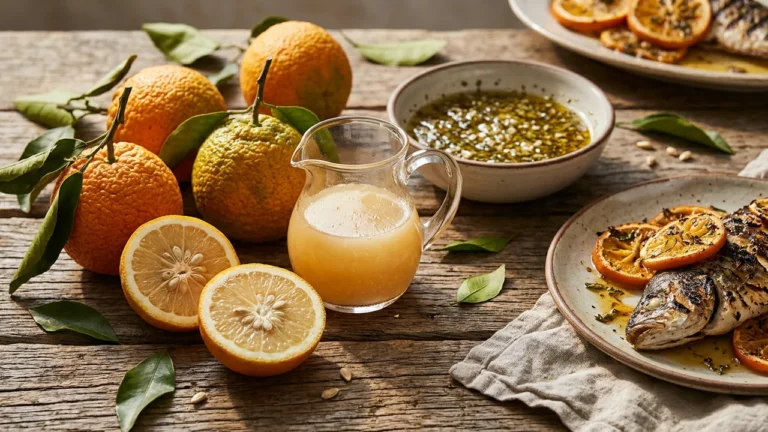
- Sour orange juice (ab-e narenj) is another traditional Persian souring juice: sour, with an orange aroma and a bitter edge. Our sour orange juice guide explains how it compares.
Can You Make Your Own Verjuice?
Yes, if you can get grapes before they ripen. The traditional process described in the 2022 review is simple: wash the green grapes, chop them, squeeze out the juice, discard the pulp and bottle the juice; some versions add salt or olive oil first. Pick before the berries soften and sweeten; the research describes verjuice grapes as harvested roughly 45 days after flowering. Expect a low yield, because hard green berries are difficult to press: studies report about 40 to 60 per cent juice.
Persian households who bottle their own take one precaution seriously. According to Iranica, they fill each bottle to the very brim, leaving no air space where mould might form; commercial ab ghooreh goes into sterilized bottles. Once a bottle is open, follow the storage instructions on its label.
Is Verjuice Healthy?
Verjuice is a high-acid, low-sugar seasoning that contains grape phenolic compounds. Beyond that, the evidence is thin. The 2022 review notes that grape compounds have been described as anti-inflammatory, cardioprotective, anticancer and antidiabetic, based on in vitro and in vivo studies of grape compounds generally, and states that there are few studies on the benefits of unripe grapes in the human diet.
The best-known human study is small. In 2012, cardiologists at Shiraz University of Medical Sciences asked volunteers with low HDL (“good”) cholesterol to drink 10 ml of verjuice after lunch and 10 ml after dinner for 60 days. Of 42 people enrolled, 35 were analysed. Average HDL rose from 35.8 to 45.9 mg/dL, and the authors called the effect “dramatic.”
But there was no control group, and the authors note they could not rule out regression to the mean. Triglycerides did not change significantly, and total cholesterol and LDL rose slightly; the paper’s own table marks the rise in total cholesterol as statistically significant. The authors also note that earlier verjuice studies had reached “extremely different conclusions.”
Two practical notes. Verjuice is strongly acidic: in that trial, some volunteers dropped out because of stomach (epigastric) pain or low compliance, and one producer interviewed in 2023 said they do not sell verjuice as a drink because the acidity “can upset your stomach.” And if you are managing your cholesterol, one small uncontrolled study is not a reason to change anything your doctor has advised.
Frequently Asked Questions
What is verjuice used for?
Verjuice is a souring agent. Persian cooks use it to sour stews (khoresh), soups and stuffed vegetables, to preserve sour plums, and in salads and sharbat; Western cooks use it in vinaigrettes, sauces and marinades, for deglazing, and in cocktails as a softer alternative to lemon juice or vinegar.
What does verjuice taste like?
Sour and fruity, with green-apple, herbaceous and citrus notes, mild astringency and little sweetness. It has none of the pungent acetic smell of vinegar, and Iranian verjuices analysed by researchers contained almost no sugar.
Is verjuice like vinegar?
Only in how it is used. Vinegar is made by fermenting juice into alcohol and then into acetic acid, while verjuice is the unfermented juice of unripe grapes whose sourness comes from malic and tartaric acids.
Is verjuice alcoholic?
No. Verjuice is pressed from unripe grapes and bottled without fermentation, so it is not an alcoholic drink like wine. Because there is no legal standard for verjuice, check the label if you need to avoid alcohol completely.
What is a substitute for verjuice?
Lemon juice is the closest everyday substitute, followed by lime juice; start with a little less, because fresh citrus juice is strong. In Persian stews, sour grape paste thinned with water gives the nearest flavour, and diluted white wine vinegar works in dressings at the cost of a sharper, more pungent edge.
Is verjuice healthy?
Verjuice is low in sugar and contains grape phenolic compounds, but human research is very limited. The main trial, a small 2012 Iranian study with no control group, found a rise in HDL cholesterol but no improvement in other blood lipids, so treat verjuice as a seasoning, not a remedy.
Sources
- Āb-ḡūra — Nesta Ramazani, Encyclopaedia Iranica, Vol. I, Fasc. 1, 1982 (updated 2018). Definition, commercial and home production, and the Persian dishes soured with ab ghooreh.
- Unripe grapes: an overview of the composition, traditional and innovative applications, and extraction methods of a promising waste of viticulture — Fia G, Bucalossi G, Proserpio C, Vincenzi S, Australian Journal of Grape and Wine Research, 2022;28:8–26. Names, acids, pH, sugar and phenolic data, sensory profile, traditional production, and the limits of the human evidence.
- Exploring Consumer and Producer Views of Verjuice: A Grape-Based Product Made from Viticultural Waste — Dupas de Matos A, Maggs R, Hort J, Australian Journal of Grape and Wine Research, 2023, Article 5548698. Verjuice as unfermented juice, its lack of a standard of identity, and the cooking, cocktail and wine-pairing uses reported by producers and consumers.
- The Effects of Unripe Grape Juice on Lipid Profile Improvement — ZibaeeNezhad MJ, Mohammadi E, Babaie Beigi MA, et al., Cholesterol, 2012, Article 890262. The Shiraz verjuice trial and its limitations, and everyday use of verjuice in Iranian meals.
- Ibrāhīmiyya all’agresto: la rivoluzione gastronomica abbaside tra Oriente e Occidente — Casari M, Settimana di studio LXIII (Spoleto), 2016, pp. 519–544. The route of verjuice from Greek and Roman medicine into Arabic and then medieval European cooking.
- Verjuice — Alan Davidson, The Oxford Companion to Food, 2014 edition. Medieval European use, Taillevent’s recipes, and the later switch to lemon juice.
- CPG Sec. 525.825 Vinegar, Definitions — US Food and Drug Administration, 1995. How vinegar is defined by alcoholic and then acetous fermentation, and its acetic acid strength.
- Quantitative assessment of citric acid in lemon juice, lime juice, and commercially-available fruit juice products — Penniston KL, Nakada SY, Holmes RP, Assimos DG, Journal of Endourology, 2008;22(3):567–570. Citric acid content of fresh lemon and lime juice.
This article is general information about a traditional ingredient and the published research on it. It is not medical advice, and nothing here is a claim that verjuice treats or prevents any condition. If you have a medical condition, take medication or are managing your cholesterol, talk to your doctor before changing your diet.
Cooking for a restaurant, café or juice bar? Verjuice, sour grape paste and our other kitchen staples are available at a wholesale price on orders of $1,000 or more, with free shipping in LA, Orange County and San Diego.
Shop Verjuice and Persian Souring Agents
The products this guide mentions, from Goaldees (also searched as Goldis), shipped nationwide across the US.