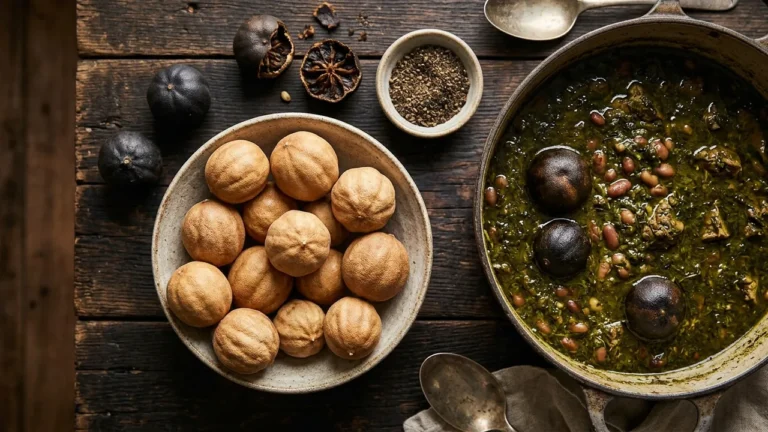

Khoresh Karafs Recipe (Persian Celery Stew)
Khoresh karafs is a Persian celery stew — celery and a generous amount of parsley and mint simmered with meat until the herbs melt into a fragrant, tangy sauce. It’s lighter and greener than most Persian stews, and it’s the one that surprises people who think of celery as a background vegetable. Here’s how to make it.
Khoresh Karafs Ingredients
- 1 lb lamb or beef, cut into stew-size cubes (or omit for a vegetarian version)
- 1 large bunch celery (about 6–8 stalks), cut into 2-inch pieces
- 1 large bunch fresh parsley, finely chopped
- 1 small bunch fresh mint, finely chopped — or dried mint
- 1 large onion, thinly sliced
- 2 tbsp tomato paste (optional, for color and body)
- 1 tsp turmeric
- Juice of 1–2 limes, or 2 dried limes, to taste
- A pinch of bloomed saffron (optional)
- Salt, pepper, and oil for frying
How to Make Khoresh Karafs
- Brown the meat. Sauté the sliced onion in oil until golden, add turmeric, then add the meat and brown on all sides.
- Simmer. Cover with water, bring to a boil, then reduce heat and simmer for about an hour, until the meat is nearly tender.
- Fry the herbs. In a separate pan, fry the chopped parsley and mint in oil over medium-low heat until deeply fragrant and darkened — about 10 minutes. Don’t rush this; it’s where the flavor comes from.
- Fry the celery. In the same pan, lightly fry the celery pieces until they take on color at the edges but still hold their shape.
- Combine. Add the fried herbs and celery to the pot along with the tomato paste, if using. Simmer another 30–40 minutes, until the celery is tender but not falling apart.
- Finish. Add lime juice (or dried limes), saffron, and salt to taste. Simmer 10 more minutes and serve over steamed rice.
Short on Time? Try the Ready-Made Version
Frying herbs and celery separately, then simmering for well over an hour, isn’t always realistic on a weeknight. Goaldees carries ready-fried canned celery — the step that takes the longest and makes the biggest difference — so you can skip straight to combining and simmering. Dried mint is also worth keeping on hand; it carries the dish’s signature aroma even when fresh herbs aren’t available.
Tips for the Best Khoresh Karafs
- Don’t undercook the herbs. Lightly wilted parsley and mint taste raw and grassy. Fry them until they darken and smell nutty — this is the single biggest difference between a flat khoresh and a great one.
- Keep the celery in pieces. Add it late enough that it stays recognizable; celery cooked to mush loses the texture that defines the dish.
- Balance the sourness at the end. Add lime gradually and taste as you go — khoresh karafs should be tangy, not sharp.
Frequently Asked Questions
What is khoresh karafs made of?
Celery, a large amount of fresh parsley and mint, onion, and usually lamb or beef, simmered together with turmeric and lime until the herbs break down into a fragrant green sauce. It’s served over rice.
How is khoresh karafs different from ghormeh sabzi?
Both are herb-based Persian stews, but ghormeh sabzi uses a different herb blend (with fenugreek) plus kidney beans and dried lime, giving it a darker, deeper flavor. Khoresh karafs is lighter and greener, built around celery with parsley and mint. See our ghormeh sabzi recipe to compare.
Can khoresh karafs be made vegetarian?
Yes — leave out the meat and simmer the herbs and celery with the onion base. You may want to shorten the initial simmering step since there’s no meat to tenderize.
Is there a faster way to make khoresh karafs?
Yes — using ready-fried canned celery removes the longest, most technique-dependent step, so you only need to simmer the stew together rather than fry each component from scratch.
Shop the Ingredients
Get authentic Persian herbs, saffron, and ready-made stew bases from Goaldees (also searched as Goldis), shipped fresh, nationwide across the US. Browse Herbs or Can Foods.
Not sure which Persian stew to try next? See our Persian Khoresht guide.
Shop the Khoresh Karafs ingredients
The Goaldees pantry items used in this Khoresh Karafs recipe — add them straight to your cart.