

Zereshk (Dried Barberries): A Buyer’s Guide to Grades, Storage and Use
Zereshk (زرشک) is the Persian name for dried barberries — tiny, bright-red, intensely sour berries of the Berberis shrub, used across Iranian cooking as a souring agent and a garnish rather than as a snack. The three things worth knowing before you buy: there are two commercial grades, pofaki (shade-dried, plump, bright) and anari (sun-dried, compressed, darker and cheaper); zereshk loses colour in storage, so it belongs in the freezer, not the spice rack; and it scorches in well under a minute in a hot pan, which is the single most common way home cooks ruin it.
Almost all zereshk sold in the United States is imported from Iran, and it is a product you cannot substitute your way out of. Goaldees (also searched as Goldis) is the wholesale source several US Persian grocers buy their barberries from, so the notes below come from handling the crop rather than from reading other people’s product pages.
Zereshk at a Glance
| English name | Barberry; dried barberries |
| Persian | zereshk (زرشک); the seedless type is zereshk bi-dane (زرشک بیدانه) |
| Botanical name | Berberis vulgaris var. asperma, or Berberis integerrima — sources genuinely disagree |
| Where it comes from | South Khorasan, Iran — chiefly Qaen (about 85% of output) and Birjand (about 15%) |
| Taste | Sharply sour, faintly fruity; closer to unsweetened cranberry or sour cherry than to raisin |
| Two grades | Pofaki (shade-dried, puffy, bright red, dearer) and anari (sun-dried, compact, dark red, cheaper) |
| Classic use | Zereshk polo — barberry rice, usually with saffron and chicken |
| Store it | Airtight, in the freezer. Not the pantry. |
| Cook time in a pan | Seconds, over low heat, in fat — never dry-toasted |
| Not the same as | Goji berries, dried cranberries, currants, or the barberry root-bark supplement |
Pofaki or Anari: The Two Grades, and Which One You Want
Iranian barberry reaches the market in two forms, and the difference is entirely about how it was dried, not about where it was grown or what species it is.
Anari (زرشک اناری, “pomegranate-seed” barberry) is dried in the open, in direct sun. The berries are spread out and turned repeatedly over one to two weeks so the underside does not mould, then milled to separate stems and debris. The result is low-moisture, compact, dark matte red, and noticeably more concentrated in flavour. It is the cheaper grade.
Pofaki (زرشک پفکی, “puffy” barberry) is dried on the branch inside enclosed halls, out of the sun. The berries hold more moisture, stay plumper, and finish glossy bright red with a softer chew. It costs more, and is the grade most buyers mean when they say they want “good” zereshk.
Here is the part that is usually left out: the grade you want depends on what you are cooking, and the premium grade is not better at everything. A 2022 study in Foods dried seedless barberry nine different ways and then stored it for six months, measuring both colour and chemistry. Sun- and shade-dried fruit kept the best colour — machine-dried samples, especially in a cabinet dryer at 70 °C, came out visibly worse. But the artificial methods retained more vitamin C, soluble solids and anthocyanin than the natural ones. The two things buyers use to judge quality — how red it looks, and how much of its chemistry survived — do not move together.
In practice:
- Buy pofaki when the berries will be seen: scattered over zereshk polo, over a rice cake, folded through a pilaf at the table. Appearance is the whole point there, and a dull berry looks like old stock even when it is not.
- Buy anari when the berries will be tasted but not seen: cooked into a stew, a stuffing, a meatball mix, a pan sauce. You get more sourness per dollar and nobody is looking at them.
- Judge the bag, not the label. Both grades should be loose and free-flowing. Clumping means moisture, and moisture in dried barberries means mould risk. Berries fused into a solid brick have been stored warm.
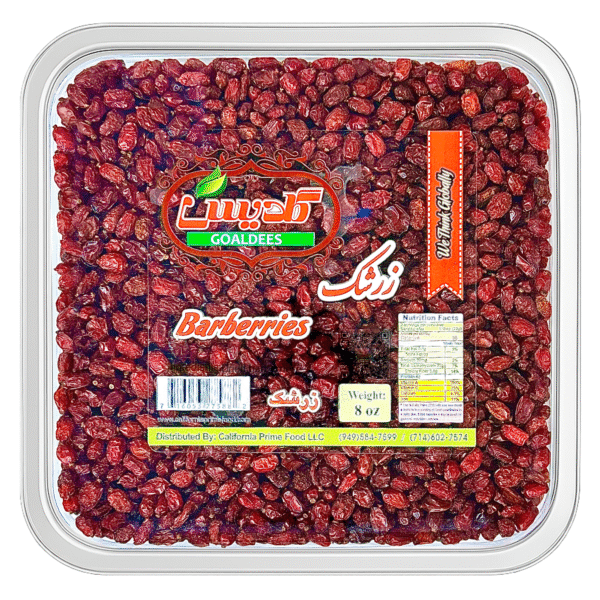
Our 8 oz pack is a seedless Iranian barberry; at $6.99 that works out to about $0.87 per ounce, which is the figure worth comparing across sellers rather than the headline pack price, since barberries are sold in everything from 45 g sachets to kilo bags.
What Zereshk Is Called in English, and Why the Species Name Varies
In English, zereshk is simply barberry, and on a label it will usually read “dried barberries.” That is the whole answer to the question most people arrive with.
The botanical name is messier, and if you compare two bags you may well see two different ones. The seedless Iranian cultivar is treated by some authorities as Berberis vulgaris var. asperma — a seedless variety of common barberry, which is how the peer-reviewed drying literature labels it. Others treat it as a separate species, Berberis integerrima, the zereshk bi-dane or “seedless barberry.” Both names refer to the same thing in your kitchen. Neither is a sign of adulteration or mislabelling; it is an unresolved taxonomic disagreement that the food trade inherited.
Two things zereshk is not, both of which come up constantly:
- Not goji berries. Goji is Lycium barbarum — in the nightshade family, much larger, oblong, sweet-tart and chewy. The shared “barbarum / barberry” sound is a coincidence of Latin, not a relationship.
- Not currants. Zereshk is often described as being used “like a currant in rice pilaf,” which is a description of its role, not its identity. Currants are sweet dried grapes. Zereshk is sour, and will not stand in for them, or they for it.
Why You Cannot Just Grow Zereshk in America
A reasonable question, asked often: barberry shrubs grow all over the United States as ornamental hedging, so why is dried zereshk an imported product? The answer is one of the stranger stories in American agriculture, and it is still partly in force.
Common barberry, Berberis vulgaris — the same species that gives us zereshk — is the alternate host of Puccinia graminis, the fungus that causes black stem rust of wheat, oats and barley. The fungus needs the barberry to complete one stage of its life cycle and to generate new races. European farmers worked out the association empirically long before anyone understood it: a law in Rouen, France banned growing barberry in 1660, nearly two centuries before the German scientist A. de Bary proved that the rust on spring barberry leaves and the rust on summer wheat were the same organism.
Colonial America reached the same conclusion independently. Connecticut outlawed barberry in 1726, Massachusetts in 1754, Rhode Island in 1766. Those laws lapsed as wheat moved west, and settlers carried barberry hedges with them — valued, the USDA notes, because the fruit “became a favorite for sauces, jellies, wines and preserves,” the bark yielded a yellow dye, and the thorns made excellent stock-proof hedging. Barberry and wheat ended up planted side by side across the Midwest.
Then came the stem rust epidemic of 1916. Within three years, twelve wheat states had banned barberry outright: the Dakotas in 1917; Michigan, Minnesota, Nebraska and Colorado in 1918; Illinois, Indiana, Iowa, Montana, Ohio, Wisconsin and Wyoming in 1919. A joint federal and state Barberry Eradication Program began in 1918 under E. C. Stakman, backed from 1919 by Federal Quarantine No. 38, which blocked the interstate movement of susceptible barberries. Six more states joined later, Kansas as late as 1955. By the time the federal programme was wound down between 1975 and 1980, more than 100 million barberry bushes had been destroyed.
And it never entirely ended. A federal black stem rust quarantine is still on the books today at 7 CFR 301.38, which states plainly that “the conterminous 48 States and the District of Columbia are quarantined in order to prevent the spread of black stem rust,” and that no person may move a regulated article interstate outside the terms of that rule. Regulated articles are plants of the genera Berberis, Mahoberberis and Mahonia that USDA testing has not cleared as rust-resistant. USDA’s Cereal Disease Laboratory still publishes identification guides for telling common barberry apart from the ornamental Japanese barberry (Berberis thunbergii) you are far more likely to meet in a nursery, and still tests new cultivars before they enter the trade.
To be exact about what this does and does not mean: the quarantine regulates living plants, because a plant can carry the fungus. Dried barberry fruit is not a regulated article under that rule — it is an ordinary imported food, and nothing about buying or eating zereshk touches the quarantine. What the history explains is the supply chain. There is no American commercial barberry orchard to buy from, because the United States spent most of the twentieth century removing the species from its wheat country. Iran, meanwhile, became the world’s largest producer, concentrated in South Khorasan around Qaen and Birjand, with records of seedless barberry cultivation there going back about two hundred years.
It also means: do not treat the hedge in your yard as a harvest. Ornamental barberries in US landscaping are usually a different species, the berries are smaller, seedier and blander, and identifying Berberis species correctly from fruit alone is not a beginner’s job.
Barberry the Supplement Is Not Barberry the Garnish
Search “barberry” and you will hit warnings about pregnancy, infants and drug interactions. Those warnings are real, and they are about something else, so it is worth being precise about where the line sits.
Berberine is an alkaloid concentrated in the root and inner bark of several plants. The US National Center for Complementary and Integrative Health lists its sources as “European barberry, goldenseal, goldthread, Oregon grape, phellodendron, and tree turmeric” — and European barberry is Berberis vulgaris, the zereshk species. It is sold as a dietary supplement and promoted for diabetes, cholesterol and, lately on TikTok, weight loss. NCCIH is blunt about the risk profile: “People who are pregnant or breastfeeding should not use berberine, and it should not be given to infants. Berberine can cause or worsen jaundice in newborn infants and could lead to a life-threatening problem called kernicterus.” It may also interact with medicines.
That is a statement about concentrated supplement doses of a root-bark extract. It is not a statement about a tablespoon of dried fruit scattered over rice, which is how zereshk has been eaten in Iran for centuries and which is what we sell. The two come from the same genus and are nothing like the same thing — in much the way that an apple is not an apple-seed extract.
Where that leaves a practical reader: the fruit is food, so treat it as food. If you are pregnant, nursing, feeding an infant, or taking prescription medication and you are considering a barberry or berberine supplement, that is a conversation for your doctor or pharmacist, not for a grocery blog. We sell the fruit and make no health claims about it.
How to Store Zereshk So It Stays Red
Zereshk fades. The colour is anthocyanin, and anthocyanin degrades with time, warmth, light and oxygen. This is the most under-explained thing about buying barberries, because a bag that looked bright on the shelf can be brick-brown by the time you reach the bottom of it.
The same Foods study that compared drying methods also stored the dried fruit for six months in polyethylene packaging at 5–10 °C — that is, refrigerated — and still measured anthocyanin falling by almost 12%. That is the floor, under near-ideal conditions. A warm cupboard above a stove does considerably worse.
So:
- Freezer, airtight, from the day it arrives. Not the fridge if you can help it, and not the pantry. Zereshk is low enough in moisture that it does not freeze into a block — you can spoon it straight out and use it frozen.
- Buy a size you will finish. Colour loss runs on a clock that started at harvest, so a kilo bag bought to save money often ends up worse value than two 8 oz packs bought six months apart.
- Keep it out of the light. Clear jars on an open shelf look lovely and are the worst place for it.
- Judge freshness by colour and feel. Bright and loose is good; dark brown, dull or clumped is old or badly stored. Flavour survives the fade better than appearance does, so faded zereshk is still perfectly usable cooked into something — just not scattered on top of rice.
How to Use Zereshk Without Burning It
Barberries are sugary and very small. In a hot pan they go from red to black faster than almost anything else in a Persian kitchen, and burnt zereshk is acrid in a way nothing rescues. Nearly every first attempt at zereshk polo is lost this way.
- Rinse first, and inspect. Barberries are dried in the open and de-stemmed mechanically, so a little grit, leaf and stem is normal even after commercial sorting. Tip them into a bowl of cold water, swirl, let the sand settle, and lift the berries off the top rather than pouring them out. Drain well.
- Soak briefly, or not at all. Ten minutes in cold water plumps them. Long soaking leaches the colour and the sourness into the water, which is the opposite of the point.
- Cook in fat, on low heat, for seconds. Melt butter or oil, take the pan off the high heat, add the drained barberries and a pinch of sugar, and stir for roughly 30 to 60 seconds — just until they swell and gloss. Do not wait for a colour change: by the time they darken they are already going. Dry-toasting them in a bare pan is the reliable way to burn them.
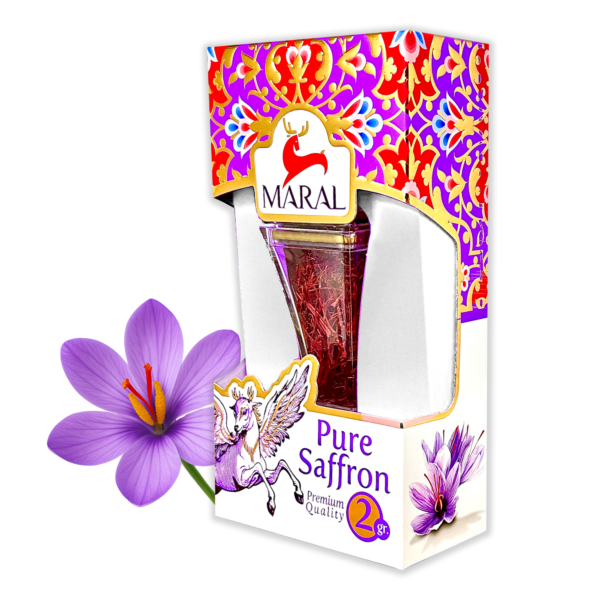
- Add the saffron at the end. A spoonful of bloomed saffron stirred in off the heat carries the colour and the aroma; added early, it cooks out.
- Keep them off the hot rice until serving. Barberries sitting on steaming rice for twenty minutes go soft and dull. Scatter them, with slivered pistachio if you are using it, as the dish goes to the table.
Beyond rice, zereshk works anywhere you would reach for something sour and small: folded into stuffings and meatball mixes, cooked into a pan sauce for chicken or lamb, stirred through a grain salad, or made into jam. Barberries are high in pectin, which is why barberry jam sets readily once boiled with sugar and needs no added setting agent.
Full method, with quantities: our zereshk polo recipe. For how zereshk sits alongside the rest of the Iranian dried-fruit larder, see the Persian dried fruits guide.
If You Cannot Find Zereshk: What Actually Works
There is no clean substitute, and most of the ones suggested online are wrong in a specific way. What you are replacing is sharp sourness in a small, chewy, scatterable package, and most candidates fail on the sourness.
| Substitute | How close | What goes wrong |
|---|---|---|
| Dried sour cherries | Closest | Genuinely sour, and the right family of flavour. Much larger, so chop them; slightly sweeter, so cut the sugar in the pan. |
| Dried cranberries | Workable, with a caveat | Right look, wrong sweetness — almost all US dried cranberries are heavily sweetened. Rinse them and add no sugar at all. |
| Fresh pomegranate arils | Garnish only | Right sour-bright note and right size, but they are wet. They will not survive the pan and they bleed into rice. |
| Currants or raisins | Not a substitute | Sweet, not sour. This swap changes the dish rather than approximating it — a common suggestion and a bad one. |
| Goji berries | No | Wrong size, wrong texture, wrong flavour. The name similarity is coincidental. |
| Lemon juice or verjuice | Partial | Replaces the acidity but none of the texture or appearance. Fine in a stew, useless as a garnish. |
Zereshk or Barberry Lavashak? Two Different Products
Because both are barberry and both are sour, these get conflated. They are not interchangeable.
Zereshk is the whole dried fruit, an ingredient. Barberry lavashak is barberry cooked down to a purée and dried into a sheet or roll — a fruit leather eaten as a snack. You cannot cook with lavashak, and you would not eat a handful of raw zereshk for pleasure. On price per ounce they are closer than they look: the 8 oz dried barberries at $6.99 is about $0.87 per ounce, while the 3 oz barberry lavashak at $2.80 is about $0.93 per ounce. The choice is about what you want it for, not about which is cheaper.
Frequently Asked Questions
What are barberries called in English?
Barberries. The Persian word is zereshk, and US labels usually read “dried barberries.” The seedless Iranian type is zereshk bi-dane, literally “seedless barberry.”
Are dried barberries safe to eat?
Yes — the dried fruit is an ordinary food, eaten in Iranian cooking for centuries as a souring agent and a garnish. The health warnings attached to the word “barberry” concern berberine, a concentrated alkaloid extracted from the root and inner bark and sold as a supplement. Those are different products.
Who should not take barberry?
That question is about barberry supplements. NCCIH advises that people who are pregnant or breastfeeding should not use berberine, that it should not be given to infants, that it can cause or worsen newborn jaundice and may lead to kernicterus, and that it may interact with medicines. That guidance concerns supplement doses of root-bark extract. For the dried fruit used in cooking, treat it as you would any tart dried fruit — and for a specific medical question, ask a clinician rather than a grocer.
Why are barberry bushes illegal in some US states?
Because common barberry is the alternate host of the fungus that causes black stem rust of wheat. After the 1916 epidemic, twelve wheat states banned it between 1917 and 1919; a federal and state eradication programme ran from 1918 until it was wound down in 1975–1980; and more than 100 million bushes were destroyed. A federal black stem rust quarantine still exists at 7 CFR 301.38, covering the 48 contiguous states. It regulates living Berberis plants, not dried fruit.
What is the difference between pofaki and anari barberries?
How they were dried. Pofaki is shade-dried on the branch in enclosed halls, so the berries stay plump, glossy and bright red; it costs more. Anari is sun-dried in the open, giving compact, darker, lower-moisture berries with more concentrated flavour at a lower price. Buy pofaki when the berries will be seen, anari when they will only be tasted.
Is barberry the same as goji berry?
No. Goji is Lycium barbarum, a nightshade; barberry is Berberis. Goji berries are larger, oblong, chewy and sweet-tart; barberries are tiny and sharply sour. The similar-looking Latin names are a coincidence.
How should I store dried barberries?
Airtight in the freezer, away from light, from the day you get them. They stay loose enough to spoon out frozen. Even refrigerated at 5–10 °C in sealed packaging, measured anthocyanin — the red pigment — fell by almost 12% over six months in one study, so a cupboard is worse, and buying a size you will finish beats buying in bulk.
Do I need to wash dried barberries before cooking?
Yes. They are dried in the open and de-stemmed mechanically, so some grit and stem is normal. Swirl them in cold water, let the sand sink, lift the berries off the surface, and drain. Do not soak for long — it pulls out the colour and the sourness.
What can I use instead of dried barberries?
Chopped dried sour cherries are the closest — and they have a rice dish of their own. Rinsed dried cranberries, as unsweetened as you can find, work visually. Fresh pomegranate arils are fine as a raw garnish but will not survive a pan. Currants and raisins are not substitutes — they are sweet where zereshk is sour.
Why are my barberries brown instead of red?
Age, warmth or light. The red is anthocyanin and it degrades steadily in storage. Brown barberries are not spoiled and the sourness largely survives, so use them in cooked dishes where appearance does not matter, and keep the next bag in the freezer.
Where does the world’s zereshk come from?
Iran is the largest producer, concentrated in South Khorasan province — roughly 85% of output around Qaen and 15% around Birjand, the same region that grows most of the world’s saffron. Seedless barberry has been cultivated there for about two hundred years.
Sources
- Interaction of Different Drying Methods and Storage on Appearance, Surface Structure, Energy, and Quality of Berberis vulgaris var. asperma — Foods, 2022. Nine drying treatments plus six months of storage in polyethylene at 5–10 °C. Natural (sun and shade) drying preserved colour indexes best and cabinet drying at 70 °C worst, while artificial methods retained vitamin C, soluble solids and anthocyanin at higher levels; storage reduced anthocyanin content by almost 12%. Also the source for Iran being the world’s largest producer of B. vulgaris fruit, with over 11,000 hectares under cultivation.
- Barberry — USDA Agricultural Research Service, Cereal Disease Laboratory. The Rouen ban of 1660; de Bary’s proof of the host relationship; the Connecticut (1726), Massachusetts (1754) and Rhode Island (1766) laws; the twelve state bans of 1917–1919; the federal and state eradication programme from 1918 under E. C. Stakman; Federal Quarantine No. 38 in 1919; the gradual termination of the federal programme in 1975–1980; and the settlers’ culinary and dye uses of the fruit.
- Barberry Situation — Past, Present, Future — USDA ARS Cereal Disease Laboratory. Berberis vulgaris as the alternate host of wheat stem rust; over 100 million bushes destroyed; the programme dated 1918 through 1975; the species’ current resurgence in the north-central states.
- 7 CFR 301.38 — Notice of quarantine; restrictions on interstate movement of regulated articles — Animal and Plant Health Inspection Service, USDA (Part 301, Subpart D, Black Stem Rust). The conterminous 48 states and the District of Columbia are quarantined against black stem rust; regulated articles are rust-susceptible plants of Berberis, Mahoberberis and Mahonia as determined by USDA testing.
- Common Barberry — ID Guide and Japanese Barberry — ID Guide — USDA ARS. Distinguishing Berberis vulgaris from the ornamental Berberis thunbergii.
- In the News: Berberine — US National Center for Complementary and Integrative Health, National Institutes of Health. Berberine’s plant sources, including European barberry; its sale as a dietary supplement; and the guidance that people who are pregnant or breastfeeding should not use it, that it should not be given to infants, and that it can cause or worsen newborn jaundice and may lead to kernicterus.
- Berberis vulgaris — the zereshk bi-dane / Berberis integerrima naming question; Iran as the largest producer; South Khorasan with roughly 85% of output in Qaen and 15% in Birjand; about two hundred years of cultivation there; the fruit’s high pectin content, and the difficulty of harvesting a thorny shrub.
- Iranian Pomegranate Seed Barberries (Anari Dried Zereshk) — Artin Nuts, an Iranian barberry exporter. The anari harvest and open-air sun-drying process, the one-to-two-week turning that prevents mould, the factory de-stemming, and the pofaki/anari price difference.
This article is general food information, not medical or nutritional advice. Prices and pack sizes quoted are our own and were current on 1 October 2026.
Cooking zereshk polo for a restaurant or catering? Barberries, saffron and our other kitchen staples are available at a wholesale price on orders of $1,000 or more, with free shipping in LA, Orange County and San Diego.
Shop the Zereshk Ingredients
Everything this guide calls for, from Goaldees (also searched as Goldis), shipped nationwide across the US.
-
Sale!
-
-
Sale!
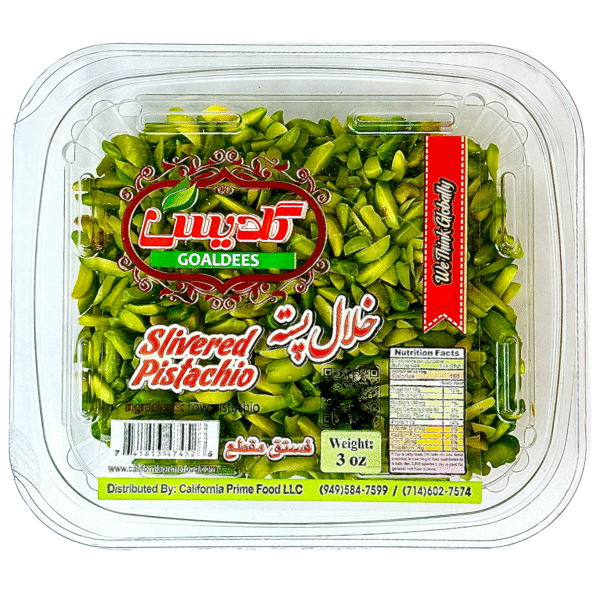
Slivered (Khalal) Pistachio 3 oz
Original price was: $12.50.$9.70Current price is: $9.70. -