

Basbousa Recipe: Semolina Cake in Orange Blossom Syrup
Basbousa is a semolina cake drenched in flower-scented syrup, and almost every failure with it comes down to one rule: the cake and the syrup must never be the same temperature. Get that right and you have a dense, syrup-soaked square that tastes of orange blossom; get it wrong and you have either a dry cake with a sweet crust or a soggy mess. This guide covers the temperature rule, when to add the flower water, and how to judge the dose when your bottle is a concentrate.
One Cake, Many Names
You will find this cake across the Eastern Mediterranean under different names: basbousa in Egypt, revani in Turkey and Greece, namoura or hareesa in Lebanon and Syria. The differences are real but small — some versions use yogurt, some coconut, some are scented with rose rather than orange blossom — and the method underneath is the same everywhere: a coarse semolina batter, baked, then flooded with sugar syrup while the temperatures are mismatched.
It is not a sponge and it is not meant to be light. The texture should be close-grained and a little sandy from the semolina, heavy with syrup at the base and drier towards the top.
The Temperature Rule
This is the whole technique, so it is worth being precise about it. Hot cake takes cold syrup, or cold cake takes hot syrup. Never both hot, never both cold.
The reason is simple physics. A hot cake has air and steam in its crumb; as it cools, that steam condenses and the cake draws liquid inward. Pour cool syrup over it at that moment and it gets pulled deep into the crumb. Pour hot syrup over a hot cake and there is no pressure difference to drive absorption — the syrup simply sits, soaks the outer layer, and turns the surface to paste while the middle stays dry. Pour cold syrup over a cold cake and it barely penetrates at all; it pools at the bottom and makes a sweet puddle under a dry cake.
Most home cooks find it easiest to make the syrup first, let it cool completely while the cake bakes, and pour it over straight from the oven. You should hear it hiss.
When to Add the Flower Water — and How Much
Orange blossom water and rose water are distillates. The compounds that carry their aroma are volatile, which means they evaporate with the steam if you boil them. Add them to a bubbling syrup and most of what you paid for leaves through the kitchen window. So: make the syrup, take it off the heat, let it stop steaming, then stir the flower water in.
On dosage, there is a trap worth knowing about. These waters are not all the same strength. A standard distillate and a concentrated or “saturated” one can differ severalfold, and the bottles rarely say so plainly. Our orange blossom water is a standard-strength distillate — a tablespoon in a batch of syrup is about right. The saturated rose water is exactly what the name says, and wants roughly half that.
The safe method with any new bottle: add two thirds of what the recipe says, stir, taste the syrup cold, and adjust. Under-scented syrup can be fixed in ten seconds. Over-scented syrup tastes of soap and cannot be fixed at all.
Ingredients
For the cake
- 300 g coarse semolina
- 100 g desiccated coconut (optional, traditional in many Egyptian versions)
- 150 g caster sugar
- 200 g plain full-fat yogurt
- 120 g butter, melted, plus more for the tin
- 1 tsp baking powder
- Pinch of salt
- Blanched almonds or slivered pistachios to decorate
For the syrup
- 300 g sugar
- 200 ml water
- 1 tbsp lemon juice
- 1 tbsp orange blossom water (or 1–2 tsp saturated rose water)
- 2 green cardamom pods, lightly crushed (optional)
Method
- Make the syrup first. Sugar, water and lemon juice into a pan. Bring to a simmer, stir until the sugar dissolves, then simmer 8–10 minutes until slightly thickened. Add the cardamom if using. Take it off the heat, let it stop steaming, then stir in the flower water. Leave it to cool completely.
- Mix the batter. Combine semolina, coconut, sugar, baking powder and salt. Stir in the yogurt and melted butter until it comes together as a thick, scoopable paste rather than a pourable batter.
- Rest it 20–30 minutes. Do not skip this. Coarse semolina needs time to absorb liquid and swell. Bake it straight away and the finished cake is gritty in a way no amount of syrup will soften.
- Press into a buttered tin, roughly 20 x 25 cm, and smooth the top flat with wet hands.
- Score it before baking. Cut diamonds or squares right through to the base. This is what lets syrup reach the inside later — cut it after baking and the syrup only ever touches the top. Press an almond or a few slivered pistachios into each piece.
- Bake at 180°C for 30–35 minutes, until the top is golden and the edges have pulled slightly from the tin.
- Flood it immediately. Straight from the oven, pour the cold syrup evenly over the hot cake. It will hiss and look like far too much liquid. It is not.
- Leave it alone for at least two hours, uncovered, at room temperature. It is better after four, and better still the next day.
Troubleshooting
- Dry in the middle, sweet on top. The syrup was warm when it met a hot cake, or the cake was not cut through to the base. Both stop syrup reaching the interior.
- Soggy, with liquid pooling underneath. Too much syrup, or the cake had cooled too far before it was poured. A cold cake cannot draw syrup in, so it collects at the bottom.
- Gritty texture. The batter was not rested, or fine semolina was used instead of coarse. Coarse semolina is the point of the cake.
- Syrup turned grainy or set hard. It crystallised. Lemon juice prevents this by breaking some of the sucrose into glucose and fructose, which interfere with crystal formation — do not leave it out, and do not stir the syrup once it is simmering.
- Tastes of soap or perfume. Too much flower water, or it was added to boiling syrup and the delicate top notes burned off leaving only the heavy ones. Next time add less, later, off the heat.
- The flavour has disappeared. The opposite problem — the flower water went in while the syrup was still boiling and evaporated. You can stir a little more into the cooled syrup before pouring.
Rose or Orange Blossom?
Both are traditional and the choice is regional as much as personal. Orange blossom is the usual scent for Egyptian basbousa — brighter, slightly bitter at the edges, citrus-adjacent. Rose is more common in Levantine and Persian-influenced versions — rounder, sweeter, more floral. Using both at once is a real practice, not a compromise, and a common Levantine ratio is roughly two parts orange blossom to one part rose.
If you want to understand these distillates more broadly, including how they are made and why they are not alcoholic despite the name, see our guide to Persian herbal waters (aragh) and our piece on cooking with rose water.
Storing and Serving
Serve at room temperature with tea or coffee. Keep it covered but not refrigerated for up to four days — the fridge firms the semolina and dulls the aromatics, and a cold syrup-soaked cake tastes noticeably flatter. If you must refrigerate it, bring it back to room temperature before serving.
It freezes well, cut into pieces and wrapped, for about two months.
Frequently Asked Questions
Why is my basbousa dry?
Almost always a temperature problem. If the cake and syrup are both hot, the syrup cannot be drawn into the crumb and just coats the surface. Pour cool syrup over a hot cake, or hot syrup over a cooled one. Cutting the cake through to the base before baking also matters — it is what gives the syrup a route inside.
Can I use fine semolina instead of coarse?
You can, but it changes the cake. Fine semolina gives a smoother, denser, more pudding-like result; coarse gives the slightly sandy bite that basbousa is known for. If coarse is all you can find, use it.
When exactly should I add rose or orange blossom water?
Off the heat, once the syrup has stopped steaming. The aromatic compounds are volatile and boil away. Adding them to simmering syrup is the most common reason a batch comes out smelling of nothing.
How much flower water should I use?
It depends on the bottle. Standard distillates and concentrated or saturated ones can differ severalfold in strength. Start with about two thirds of the quantity a recipe gives, taste the cooled syrup, and add more if needed. Too little is fixable; too much is not.
What is the difference between basbousa, revani and namoura?
Mostly name and region. Basbousa is Egyptian, revani is Turkish and Greek, namoura or hareesa is Levantine. Recipes vary in whether they use yogurt, coconut or ground nuts, and in whether the syrup is scented with rose or orange blossom, but the semolina-plus-syrup method is shared.
Shop the Ingredients
The syrup is where this cake is won or lost. Goaldees (also searched as Goldis) stocks orange blossom water, saturated rose water (golab), green cardamom and slivered pistachios for the top, with fast nationwide US shipping. Browse the full range of Persian herbal waters and distillates.
Shop the Basbousa ingredients
The Goaldees pantry items used in this basbousa recipe — the flower waters for the syrup, and the pistachios for the top.
-

-
Sale!
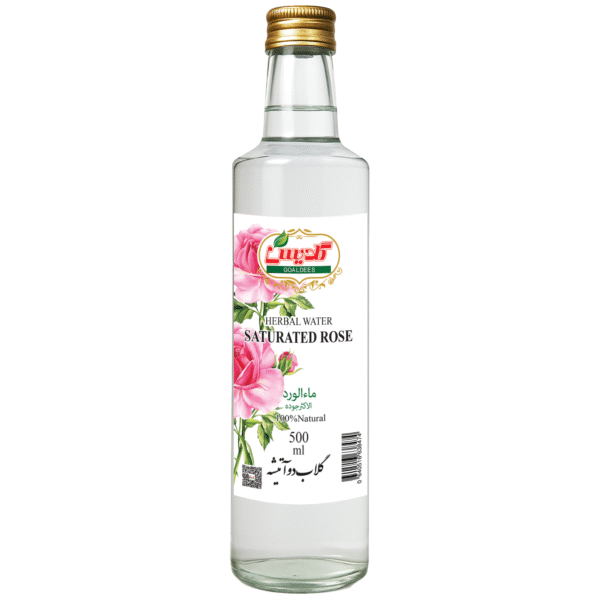
Saturated Rose Water (Golab) 500 ml
Original price was: $5.80.$4.48Current price is: $4.48. -

-
Sale!
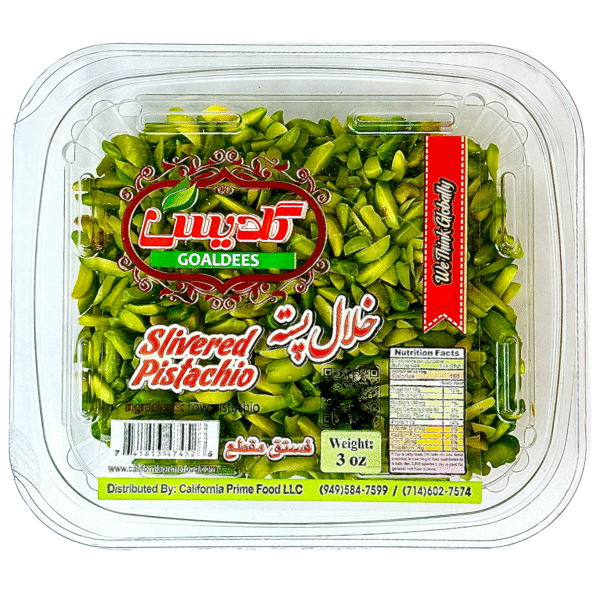
Slivered (Khalal) Pistachio 3 oz
Original price was: $12.50.$9.70Current price is: $9.70.