
Persian Herbal Waters (Aragh) Guide: Types & How to Use Them
Aragh (عرق, also spelled araq) literally means “sweat” — from the Arabic ʿaraq, for the way droplets bead and run off a still — and it widened to mean any distillate, which is why a single word now names two completely different drinks. In Persian it covers both the non-alcoholic distilled herbal waters found in every Iranian kitchen (aragh-e nana, aragh-e bidmeshk, golab) and the alcoholic raisin spirit aragh sagi — and the qualifier after the word is the only thing that tells you which one is meant.
Bare “aragh” in an English-language search usually surfaces the spirit. This guide is about the other one: the herbal waters, how they are made, and the fifteen or so varieties you will actually meet. If you want the spirit, skip to the section below.
Aragh is made by steam-distilling herbs, flowers or spices, and has been part of Persian households for centuries — sipped on its own, mixed into drinks, or used in cooking and baking.
How Is Aragh Made?
Aragh is made by hydrodistillation. Fresh herbs or flowers are heated with water; the steam carries the plant’s volatile aromatic compounds upward, and that vapour is condensed back into a fragrant liquid. In the scientific literature these products are called hydrosols or aromatic waters — defined as “the co-distilled water with essential oils, which contains partial amounts of more water-soluble volatile compounds.” That distinction matters: an aragh is not a diluted essential oil. It carries a different, more water-soluble fraction of the plant’s chemistry, which is why it smells and tastes softer than the oil from the same plant.
No fermentation occurs at any point, and no alcohol is produced.
Why “Aragh” Gets Confused With Alcohol
This is the most common point of confusion about Persian herbal waters, and it has a genuine linguistic explanation. The word descends from the Arabic ʿaraq, meaning “sweat” or “perspiration” — a reference to the way condensed droplets bead and run during distillation. Over time it came to mean any distillate, alcoholic or not.
That one root produced several very different descendants: the anise spirit arak, the Southeast Asian arrack (from ʿaraq al-tamr, literally “sweat of the date”), and the non-alcoholic Persian herbal waters described here. Adding to the confusion, in colloquial Iranian, Armenian, Azerbaijani and Georgian usage “aragh” on its own is also used to mean vodka.
So the ambiguity is real rather than a simple mistake: the same word legitimately names both a distilled spirit and a distilled herbal water. The qualifier is what separates them. Aragh-e nana (mint), aragh-e bidmeshk (musk willow) and aragh-e kasni (chicory) are all non-alcoholic herbal waters — the category everything below belongs to.
Aragh Sagi — The Other Aragh, and How to Tell Them Apart
If you searched “aragh” and landed on liquor retailers, this is why. Aragh sagi (عرق سگی) is a type of Iranian moonshine distilled from raisins, usually around 50% alcohol. The name translates literally as “doggy distilled [beverage]” — sagi from sag, dog — used the way English uses “rotgut”. It has been banned in Iran since the 1979 revolution, which pushed production underground, and in the last few years diaspora distillers in the United States have begun making it legally and openly.
It has nothing in common with the herbal waters on this page except the word. One is a 50% spirit; the other is water with an aromatic fraction in it and no alcohol at all.
Telling them apart before you buy
| Herbal water (this page) | Aragh sagi | |
|---|---|---|
| What it is | Steam-distilled plant water | Distilled raisin spirit |
| Alcohol | None | Around 50% ABV |
| Named as | Always qualified: aragh-e nana, aragh-e bidmeshk, aragh-e kasni | Qualified too, but with sagi — or sold simply as “aragh” in English |
| Bottle | 500 ml, in the grocery aisle | 750 ml, behind a liquor licence |
| Price | Under $6 a bottle | Roughly ten times that |
The practical rule: read the qualifier, not the word. An aragh named after a plant — mint, musk willow, chicory, borage, thyme — is a herbal water. An aragh named sagi, or sold with an ABV on the label, is the spirit.
Something we can tell you that a liquor retailer cannot: we stock seventeen of the non-alcoholic kind, all in 500 ml bottles and all under $6 — which is the honest scale of the difference. The varieties that genuinely exist as shelf products in the US are the ones listed below; most of the rest you will read about are regional or home-distilled and never reach a shop.
Common Types of Persian Herbal Water
Golab — Rose Water
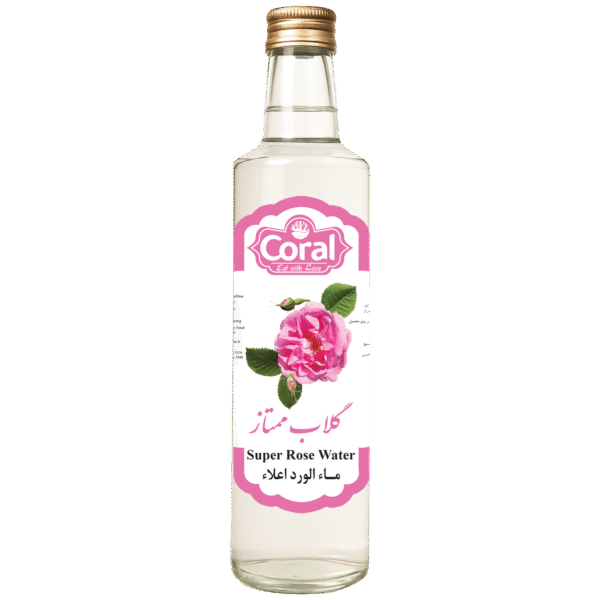
گلاب — The most well-known aragh, distilled from rose petals. Used to flavor tea, rice, and desserts, and traditionally splashed on guests as a welcoming gesture. Shop golab (rose water).
See our full rose water guide for how it’s used in tea, rice, and desserts.
Mint Water
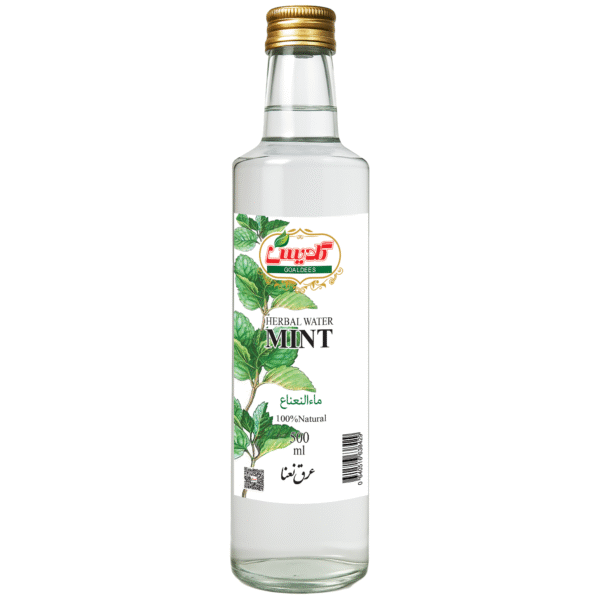
عرق نعناع — A cooling, refreshing herbal water traditionally sipped after meals. Shop mint water. See the full aragh nana guide for how it is used and why mint tastes cold.
Chicory Water (Kasni)
عرق کاسنی — Made from chicory, with a mild, slightly bitter herbal profile — a traditional after-meal sip in Persian households. Shop chicory water. See the full aragh kasni guide for why the name covers two different species, and what the research does and does not support.
Thyme Water (Avishan)
عرق آویشن — Distilled from thyme, with a warm, herbal aroma — often kept on hand as a household staple. Shop thyme water.
Musk Willow Water (Bidmeshk)
عرق بیدمشک — Distilled from musk willow blossoms, with a delicate floral fragrance, traditionally sipped on its own or mixed into rice pudding and other desserts. Shop bidmeshk (musk willow water).
See the full aragh bidmeshk guide for how it’s used and how it compares to rose water.
Camel’s Thorn Water (Kharshotor)
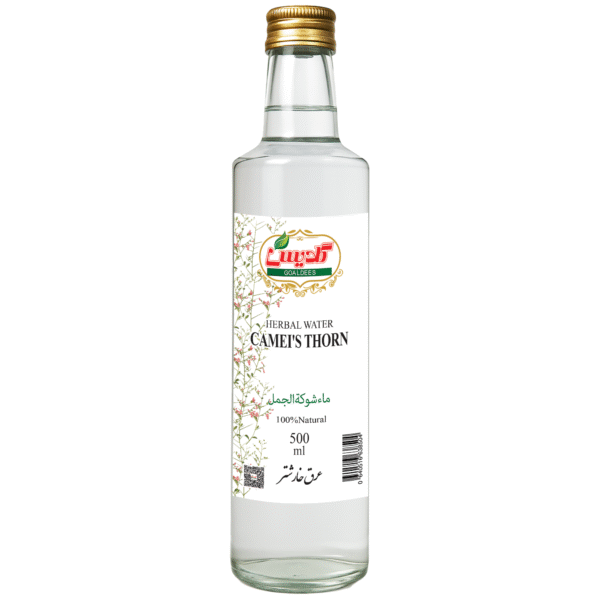
عرق خارشتر — Distilled from camel’s thorn, a plant long used in Persian herbal tradition. Shop kharshotor (camel’s thorn water). See the full aragh kharshotor guide for why some US labels call it “Hedysarum” and what the manna taranjabin is.
Forty Plant Water
عرق چهل گیاه — A blend distilled from a mix of herbs (traditionally around forty different plants), a well-known multi-herb aragh in Persian households. Shop forty plant water.
Cardamom Water (Hel)
عرق هل — Distilled from cardamom, with a warm, sweet-spiced aroma — a popular addition to tea. Shop hel (cardamom water).
Dog Rose Water (Nastaran)
عرق نسترن — Distilled from dog rose blossoms, with a lighter, wilder floral character than classic golab. Shop nastaran (dog rose water).
Fumitory Water (Shahtareh)
عرق شاهتره — Distilled from fumitory, a plant with a long history in Persian herbal tradition. Shop shahtareh (fumitory water).
Cumin Water (Zireh)
عرق زیره — Distilled from cumin seed, with a warm, earthy aroma quite different from the culinary spice’s typical use. Shop zireh (cumin water).
Orange Blossom Water
عرق بهار نارنج — Distilled from bitter orange blossoms, with a bright, citrusy floral aroma — popular in both drinks and baking. Shop orange blossom water. See the full aragh bahar narenj guide for how it differs from neroli oil and from bitter orange supplements.
Borage Water (Golgavzaban)
عرق گاوزبان — Distilled from the flowers of Echium amoenum — the Iranian plant, which is not the same species as European borage — and a traditional household staple. See what aragh golgavzaban is and how to use it, or shop golgavzaban (borage water).
Ajwain Water (Zenian)
عرق زنیان — Distilled from ajwain (carom seed), with a sharp, thyme-like aroma — traditionally used to settle the stomach after a heavy meal. Shop zenian (ajwain water).
Chamomile Water (Babooneh)
عرق بابونه — Distilled from chamomile flowers, with a gentle, calming floral character — often sipped in the evening the same way chamomile tea is used elsewhere. Shop babooneh (chamomile water).
What Is Actually In an Aragh?
Because a hydrosol captures the water-soluble fraction rather than the oil, its chemistry is measurably different from the essential oil of the same plant. Published analysis of rose water samples from Iran found the dominant compound to be phenethyl alcohol, reported in the range of roughly 69.7–81.6% of the profile, alongside smaller amounts of citronellol and geraniol. Phenethyl alcohol is highly water-soluble and carries the soft, rounded rose scent people recognise in golab — whereas rose essential oil is dominated by the less water-soluble citronellol and geraniol, and smells sharper and far more concentrated.
Practically, that is why you can stir a tablespoon of golab into a dish but would use only a drop of rose oil, and why the two are not interchangeable in a recipe.
Traditional Use — and What the Evidence Does and Doesn’t Say
Persian aromatic waters have a long documented history as everyday beverages and household remedies. A 2017 survey in the Journal of Evidence-Based Complementary & Alternative Medicine catalogued 20 monoherbal and polyherbal hydrosols used in Persian nutrition culture — including Damask rose (golab), musk willow (bidmeshk), dog rose, and starflower/borage (gol gavzaban) — and recorded the traditional indications attributed to them, largely around mood, sleep and neurological complaints.
It is worth being precise about what that means. The paper documents what tradition has claimed, and presents those indications as warranting further investigation — not as demonstrated clinical effects. Aragh is best understood as a culinary and cultural ingredient with deep historical roots: enjoy it for its flavour and its tradition, and don’t treat it as a substitute for medical care.
How to Use Aragh
- Sipped on its own — many aragh varieties are drunk straight, often after a meal, sometimes lightly sweetened.
- Mixed into drinks — a splash in water, tea, or sekanjebin (mint-vinegar syrup) adds a fragrant twist.
- In desserts — golab and bidmeshk are common flavorings in rice pudding, saffron rice pudding (sholeh zard), and other sweets.
- As a welcoming gesture — rose water is traditionally splashed on guests’ hands at celebrations and gatherings.
Frequently Asked Questions
What is the meaning of aragh?
Aragh (عرق) literally means “sweat”, from the Arabic ʿaraq — a reference to the way droplets bead and run off a still during distillation. It widened to mean any distillate, which is why the same word names both Iran’s non-alcoholic distilled herbal waters and the alcoholic raisin spirit aragh sagi. The qualifier that follows it tells you which is meant.
Is aragh the same as aragh sagi?
No. They share a word and nothing else. An aragh named after a plant — aragh-e nana (mint), aragh-e bidmeshk (musk willow), aragh-e kasni (chicory) — is a non-alcoholic distilled herbal water sold in grocery aisles. Aragh sagi is a distilled raisin spirit of around 50% alcohol, sold under a liquor licence.
Why is aragh sagi banned in Iran?
Alcohol production and sale were prohibited in Iran after the 1979 revolution, which pushed aragh sagi into underground production where it has remained. In recent years Iranian diaspora distillers in the United States have begun producing it legally and openly instead.
What type of alcohol is arak?
Arak is an anise-flavoured distilled spirit from the Levant, usually made from grapes and aniseed, and it turns cloudy white when water is added. It shares the same Arabic root as aragh but is a different drink from both Persian herbal waters and the raisin-based aragh sagi.
Is aragh (Persian herbal water) alcoholic?
No. Persian herbal waters are non-alcoholic: they are made by hydrodistillation, with no fermentation at any stage. The confusion is linguistic — “aragh” derives from the Arabic word for “sweat,” describing condensation during distillation, and came to mean any distillate. The same root gave us the spirit arak, and colloquially “aragh” is also used for vodka in Iran and the Caucasus. A named herbal water such as aragh-e bidmeshk or aragh-e nana contains no alcohol.
What is the difference between an aragh and an essential oil?
An aragh (hydrosol) is the aqueous co-distillate carrying the plant’s water-soluble volatile compounds; an essential oil is the separated oil fraction. They differ chemically: analysis of Iranian rose water found it dominated by phenethyl alcohol, while rose essential oil is richer in citronellol and geraniol. Aragh is far milder, and is used by the spoonful rather than the drop.
Does aragh have proven health benefits?
Persian aromatic waters have well-documented traditional uses, catalogued in published surveys of Persian folk medicine — but documenting a traditional indication is not the same as demonstrating a clinical effect. Treat aragh as a culinary and cultural ingredient, and speak with a qualified healthcare professional about any health concern.
What is the most popular type of aragh?
Golab (rose water) is the most widely known and used, appearing in tea, rice dishes, desserts, and as a traditional welcoming gesture for guests.
How should aragh be stored?
Store aragh in a cool, dark place, tightly sealed. Once opened, refrigeration helps preserve its fragrance longer.
Can I use aragh in baking?
Yes — rose water and orange blossom water in particular are popular flavorings in Persian and Middle Eastern baking and desserts.
Sources
- A Survey on Chemical Constituents and Indications of Aromatic Waters (Hydrosols) Used in Persian Nutrition Culture and Folk Medicine — Journal of Evidence-Based Complementary & Alternative Medicine, 2017. Definition of hydrosols and a survey of 20 Persian aromatic waters.
- Chemical composition analysis of rose water samples from Iran — Pharmaceutical Biology. Phenethyl alcohol, citronellol and geraniol content of Iranian golab.
- Merriam-Webster: arrack — etymology of the Arabic root ʿaraq (“sweat”) shared by arrack, arak and aragh.
- Aragh Sagi — Wikipedia. The raisin-distilled Iranian spirit, its alcohol content, and the literal sense of araq-e sagi.
This article covers the culinary and cultural use of Persian herbal waters. It is not medical advice, and nothing here is a claim to treat, prevent or cure any condition.
Shop the Full Herbal Water Collection
Browse the complete range of authentic Persian herbal waters at Goaldees (also searched as Goldis), shipped fresh, nationwide across the US. Shop the full herbal waters (aragh) collection.
Shop Persian herbal waters
The aragh covered in this guide — add them straight to your cart.
-
-
-

-
Sale!
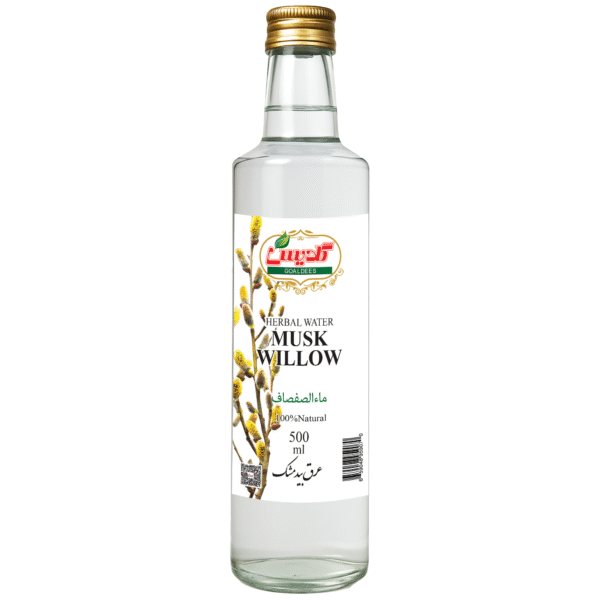
Musk Willow Herbal Water (Bidmeshk) 500 ml
Original price was: $5.80.$4.48Current price is: $4.48. -
-