

Persian Love Cake: Almond Cake with Rose Water, Cardamom & Saffron
Persian love cake is a soft almond and semolina cake flavored with ground cardamom and orange zest, soaked while still hot in a lemon syrup scented with rose water and saffron, then finished with slivered pistachios and dried rose petals. The version below uses 200 g almond flour, 165 g fine semolina, 1 cup yogurt and 1½ teaspoons cardamom, bakes in a 9-inch pan for about 55 minutes at 350°F (180°C), and needs an hour to soak before you slice it. It serves 10 to 12.
Is Persian Love Cake Actually Persian?
Its flavors are, but the cake itself has no documented history in Iran. The name usually comes with a legend: a young woman bakes a rose-scented cake to win the heart of a prince. No one has traced that story, or the recipe, to a historical source. The cake became a café favorite in Australia and spread from there through food blogs and cookbooks. It is more accurate to call it a modern cake built on Persian flavors than a traditional Iranian dessert.
The ingredients are what make it feel Persian. Rose water, cardamom, saffron and pistachios run through Iranian sweets, from sholeh zard rice pudding to the small yogurt cupcakes called cake yazdi, named for the city of Yazd and flavored with the same cardamom and rose water. Cake yazdi is the closest genuine Iranian relative. Persian-language recipe sites now publish the love cake too, usually under a literal translation of its English name: keyk-e eshgh (کیک عشق), “love cake.”
Ingredients
For one 9-inch (22 to 23 cm) round cake, about 10 to 12 slices.
For the cake
- 200 g (2 cups) almond flour or almond meal. You can also blitz 200 g slivered almonds in a food processor with 2 tablespoons of the sugar until fine; stop before it turns oily.
- 165 g (1 cup) fine semolina
- 1 tablespoon baking powder
- 1½ teaspoons freshly ground green cardamom (the seeds of about 20 pods)
- ¼ teaspoon fine salt
- 115 g (½ cup) unsalted butter, softened
- 150 g (¾ cup packed) light brown sugar
- 150 g (¾ cup) granulated sugar
- 2 large eggs, at room temperature
- 245 g (1 cup) plain whole-milk yogurt
- Finely grated zest of 1 orange
- 40 g (⅓ cup) slivered pistachios, to scatter on before baking
For the saffron rose syrup
- A generous pinch (about 0.1 g, roughly 40 threads) of saffron
- 1 tablespoon hot water
- 80 ml (⅓ cup) fresh lemon juice
- 70 g (⅓ cup) granulated sugar
- 1 to 2 teaspoons rose water (golab), to taste
To finish
- A small handful of dried rosebuds, petals pulled apart
- More slivered pistachios
- Optional: a light dusting of powdered sugar
How to Make Persian Love Cake
- Prepare the pan and oven. Heat the oven to 350°F (180°C), or 320°F (160°C) with a fan. Grease a 9-inch round pan, ideally springform, and line the base with baking paper. The soaked cake is tender, and a lined springform pan lets you release it without breaking it.
- Bloom the saffron. Crush the saffron threads between your fingers or with a pinch of sugar in a mortar, then stir in the tablespoon of hot water and set aside. Ten minutes of soaking releases most of its color and aroma.
- Mix the dry ingredients. In a bowl, whisk together the almond flour, semolina, baking powder, cardamom and salt, breaking up any lumps of almond flour.
- Cream the butter and sugars. Beat the butter with both sugars for 2 to 3 minutes, until combined and slightly lighter. Beat in the eggs one at a time, then the yogurt and orange zest. The mixture may look a little split at this stage; it comes together when the dry ingredients go in.
- Combine and fill the pan. Fold the dry ingredients into the wet ones until no streaks remain. Do not beat it hard; this is a dense, moist cake, not a sponge. Scrape the batter into the pan, smooth the top and scatter the slivered pistachios over it.
- Bake. Bake for 50 to 60 minutes, until the top is deep golden and a skewer pushed into the center comes out clean. If the top is browning too fast after 35 minutes, lay a sheet of foil loosely over it.
- Make the syrup while it bakes. Put the lemon juice and sugar in a small saucepan and simmer for 2 minutes, stirring until the sugar dissolves. Take it off the heat, then stir in the bloomed saffron with its water and 1 teaspoon of rose water. Taste and add more rose water only if you want it stronger. Keep the syrup warm.
- Soak the cake. As soon as the cake comes out of the oven, poke 30 to 40 holes all the way through with a skewer and spoon the warm syrup slowly over the whole surface. Hot cake and warm syrup matter: a cooled cake absorbs syrup unevenly and goes soggy on top.
- Rest, then finish. Leave the cake in the pan for at least 1 hour so the syrup soaks through and the crumb firms up. Release it, scatter the rose petals and extra pistachios over the top, and dust with powdered sugar if you like.
Getting the Rose Water Right
Rose water is the ingredient most likely to ruin this cake, because strength varies a lot from bottle to bottle. Too much tastes soapy. Start with 1 teaspoon in the syrup, taste it while it is warm, and add more half a teaspoon at a time. Concentrated styles, such as Goaldees’ saturated rose water or Coral’s super rose water, need less than a mild supermarket bottle. Our guide to cooking with rose water covers how to judge it.
The same goes for cardamom: freshly ground seeds from whole pods are far more aromatic than pre-ground cardamom, which loses its scent within months of opening. Crack the pods, tip out the black seeds and grind them in a mortar or spice grinder just before you bake.
What Can Go Wrong
- The center sank. It came out too early, or the oven door was opened in the first half of baking. Trust the skewer test, not the color of the top.
- The cake is dry or crumbly. It was overbaked, or the syrup went onto a cold cake. The syrup is where most of the moisture comes from, so soak it hot.
- The top is soggy. The syrup was poured on too fast. Spoon it slowly so it soaks down through the holes instead of pooling.
- It tastes soapy or perfumed. Too much rose water. Next time use less and taste the syrup before it goes on.
- It is gritty. The almond flour was coarse, or homemade almond meal was not ground finely enough. Fine semolina, not coarse, also gives a smoother crumb.
Variations
- Saffron through the cake. Bloom a second pinch of saffron and beat it in with the yogurt for a gold crumb, not just a gold syrup.
- Lemon instead of orange. Use lemon zest in the batter for a sharper, brighter cake that matches the syrup.
- Cupcakes. Spoon the batter into a lined muffin tin, two-thirds full, and start checking with a skewer at about 20 minutes. Brush the syrup over the tops while they are hot. The result is close in spirit to cake yazdi.
- Gluten-free. Semolina is made from wheat, so this cake is not gluten-free as written. Published versions made with almond flour alone exist; they come out denser and more fragile, so expect a different texture rather than a straight swap.
How to Serve It
Serve it at room temperature with Persian tea, a pot of rosebud tea or coffee, plain or with a spoonful of thick yogurt or whipped cream. It is a natural fit for a Yalda Night table next to pomegranates and nuts, for Nowruz guests, or as a birthday cake for someone who likes floral desserts. It travels well, which makes it a good cake to bring when you visit.
Covered, it keeps for 2 days at room temperature and about 5 days in the fridge. The syrup keeps it moist, and many people think it tastes better on the second day.
Frequently Asked Questions
Is Persian love cake actually Persian?
Its flavors are Persian, but the cake has no documented history in Iran. It is best understood as a modern cake, popularized in Australia and online, built on traditional Persian ingredients: rose water, cardamom, saffron and pistachios.
What is Persian love cake called in Farsi?
There is no older Persian name for it. Persian-language recipe sites usually translate the English name literally as keyk-e eshgh (کیک عشق), meaning “love cake.”
Why is it called love cake?
The name comes from a legend about a young woman who baked a rose-scented cake to win a prince’s love. It is a charming story, but no one has traced it to a historical source.
How much rose water should I use?
Start with 1 teaspoon in the syrup and taste before adding more. Rose water strength varies widely between brands, and too much makes the cake taste soapy.
Can I make Persian love cake ahead?
Yes. It is at its best several hours after soaking and is often better the next day. Keep it covered at room temperature for up to 2 days, or in the fridge for about 5 days. Add the rose petals just before serving.
Sources
- Nagi Maehashi, Persian Love Cake, RecipeTin Eats (reference for the almond-and-semolina proportions and the hot-syrup method; this version, with saffron in the syrup and freshly ground cardamom, is our own).
- Omid Roustaei, Cake Yazdi: Cardamom and Rosewater Cupcakes, The Caspian Chef (the traditional Iranian cupcake from Yazd).
- Setare, طرز تهیه کیک عشق ایرانی (a Persian-language recipe using the name keyk-e eshgh).
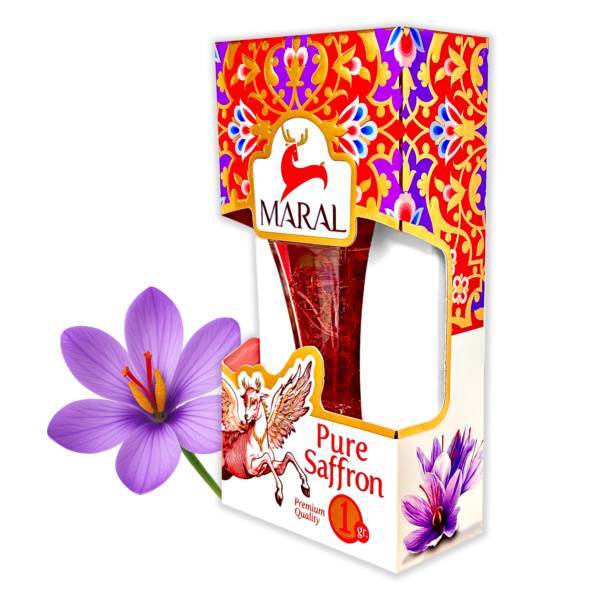
All of the Persian ingredients in this cake are on the shelf at Goaldees (also searched as Goldis): cardamom, rose water, saffron, slivered pistachios and almonds, and dried rosebuds for the top. For a ready-made treat on the same table, see our guide to Persian sweets.
Baking for a café, bakery or Persian market? Goaldees offers wholesale pricing on orders of $1,000 or more, with free delivery in Los Angeles, Orange County and San Diego.
Shop the Persian love cake ingredients
-

-
Sale!
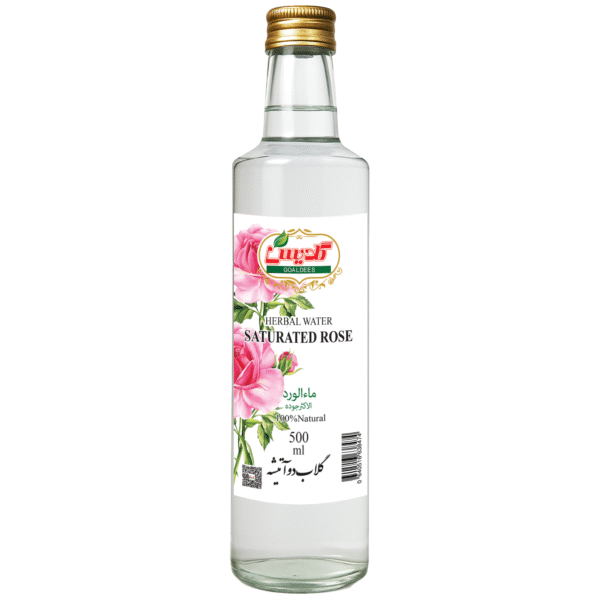
Saturated Rose Water (Golab) 500 ml
Original price was: $6.49.$4.99Current price is: $4.99. -
-
Sale!
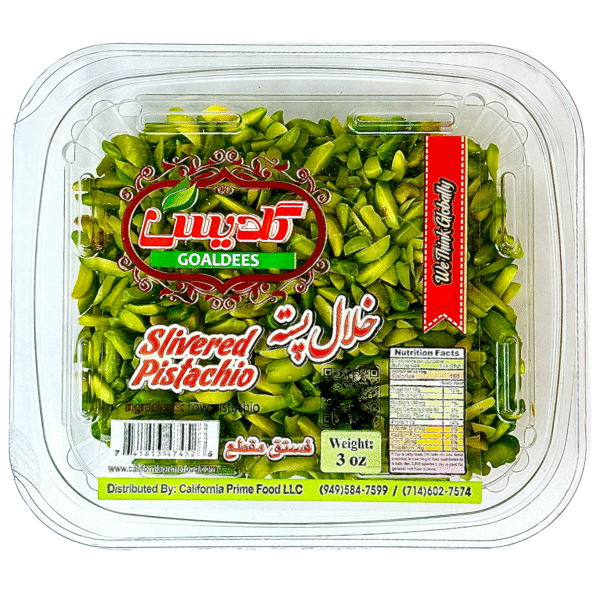
Slivered (Khalal) Pistachio 3 oz
Original price was: $13.99.$10.49Current price is: $10.49. -
Sale!

-
Sale!